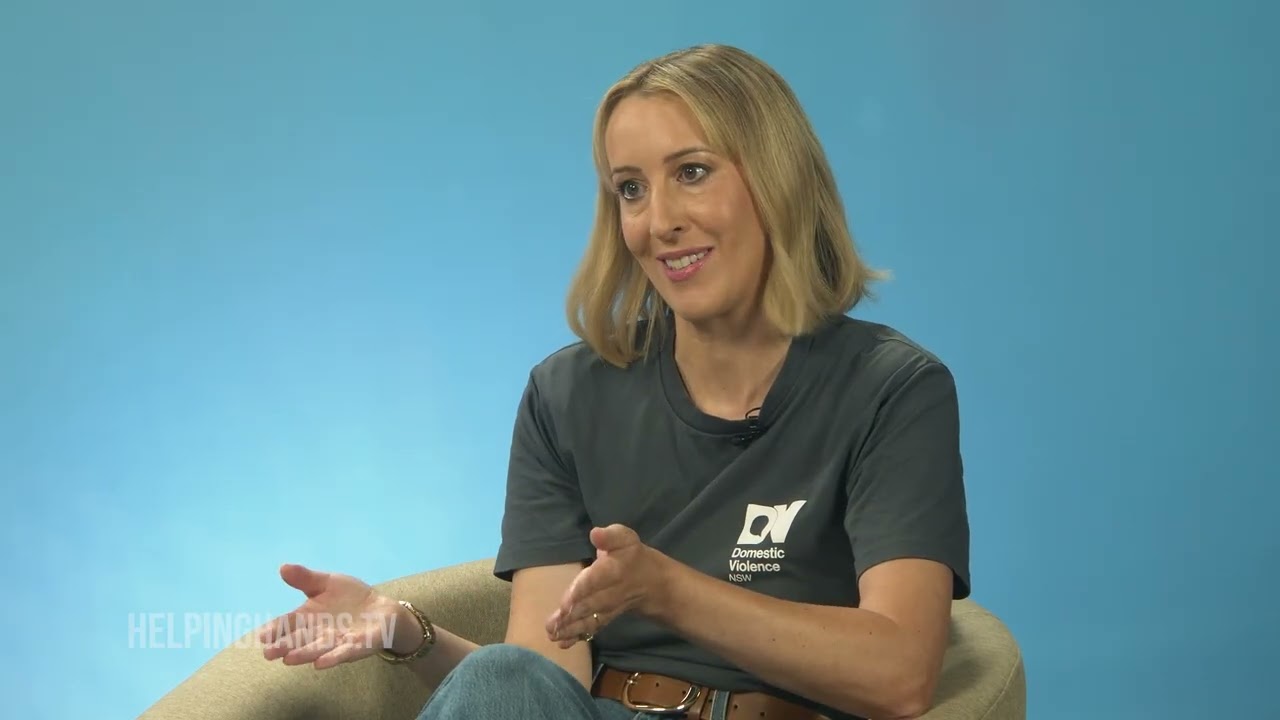
Domestic violence is a national crisis affecting every corner of Australian society. That's the sobering message from Helping Hands panellists Delia Donovan (CEO of Domestic Violence NSW), Steve Frost (founder and director of Horizons Family Law Centre), and Kate Fylan (NSW and ACT State Manager of Family and Domestic Violence at the Salvation Army).
What Is Domestic Violence?
Domestic violence is based on "domination, power, and control", says Delia.
"It can include physical abuse, which could be biting, choking. It could be emotional or psychological, which could be about isolating someone, putting them down ... Financial abuse ... spiritual abuse. There's many, many forms."
The ripple effects of domestic and family violence extend far beyond the immediate victim; children are profoundly impacted, friends notice loved ones withdrawing, and society bears the burden through healthcare, policing, housing, and in education.
Delia says domestic violence and its ripple effect is an epidemic and a national crisis.
The Statistics Around Domestic and Family Violence
On average, two women per week are killed by a partner or former partner in Australia, and one child every two weeks is killed usually by a father figure.
The Salvation Army supports up to 10,000 women and children every year through crisis accommodation, transitional housing, and specialised casework programs.
"There is not a community in Australia ... where domestic violence, sexual violence, or family violence is not present," says Kate.
Legal Protections
Steve says that the legal system, while often a last resort, can provide critical protection and rapid intervention.
"The police have the ability to address [domestic violence calls] surprisingly quickly," he explains. "[On the] same day, we can hand over a piece of paper that's just been printed and immediately protective orders are in place."
The legal system can also help to establish financial sustainability through child support, create safe parenting arrangements, and help victims disentangle shared assets to allow a fresh start.
Steve says the law recognises that every person in Australia has a right to freedom of movement.
The Critical Role of Safe Housing
Delia says domestic violence is the leading cause of homelessness in Australia, with people sleeping in cars and tents because they can't access safe accommodation.
She says that despite the many housing options available, including crisis accommodation, transitional housing, refuges, and core and cluster units, there is not enough social housing available to accommodate the needs of victims of domestic violence.
Recognising the Warning Signs
Delia, Kate, and Steve identify key signs we can all look out for to help recognise when domestic violence is taking place. These include:
If you spot signs of domestic violence, the panel agrees that a non-judgemental response is best. Ask open-ended questions, allow the person to speak freely and openly, and be guided by that person’s own self-determination.
If you or someone you know is experiencing domestic violence or distress, please call 1800 RESPECT, or Lifeline: 13 11 14.
#helpinghandstvau #makingtheworldabetterplace #paneldiscussion #impactmakers #impact #gamechangers #socialgood #tvshowforsocialgood #becabbott #domesticviolence #domesticandfamilyviolence #domesticabuse #endingdomesticabuse #endingviolence #1800respect #lifeline #domesticviolencensw #deliadonovan #horizonsfamilylawcentre #stevefrost #salvationarmy #katefylan